The Customer
|
Datascan Document Services was founded in 1993, having originally been named Papertrace. Initially established to process sale or return data for the Irish newspaper and print industry, the company established their document services bureau in 2009, whilst still continuing its data processing services to the newsprint sector. The successful document services bureau has now services the document management needs of customers ranging from enterprise level to SMEs. Sectors served include primary care providers, hospital consultants, legal, financial and insurances and organisations across the gamut of Irish industry. The Product
|
 |
The Challenges
The company were seeking a solution to streamline their document management solutions. From 2009 they had been using a piece of software that is widely in use in Ireland. Unfortunately, while this software was robust, it was more suited to the bulk processing of structured and semi structured forms. Because DataScan were a much smaller bureau at the time, they needed software that was agile and able to deal with many document formats, not just nice and neat forms. They were also looking for a solution that would tick all the boxes from the point of view of encryption and other useful functionality. With the condition of the records being poor in some instances, they needed a solution that could effectively scan a wide variety of document types and a variety of coloured forms. They also had the issue of heavier gauge paper being used in the middle of charts and a lack of a single patient identifier for some cohorts of records.
The Solutions
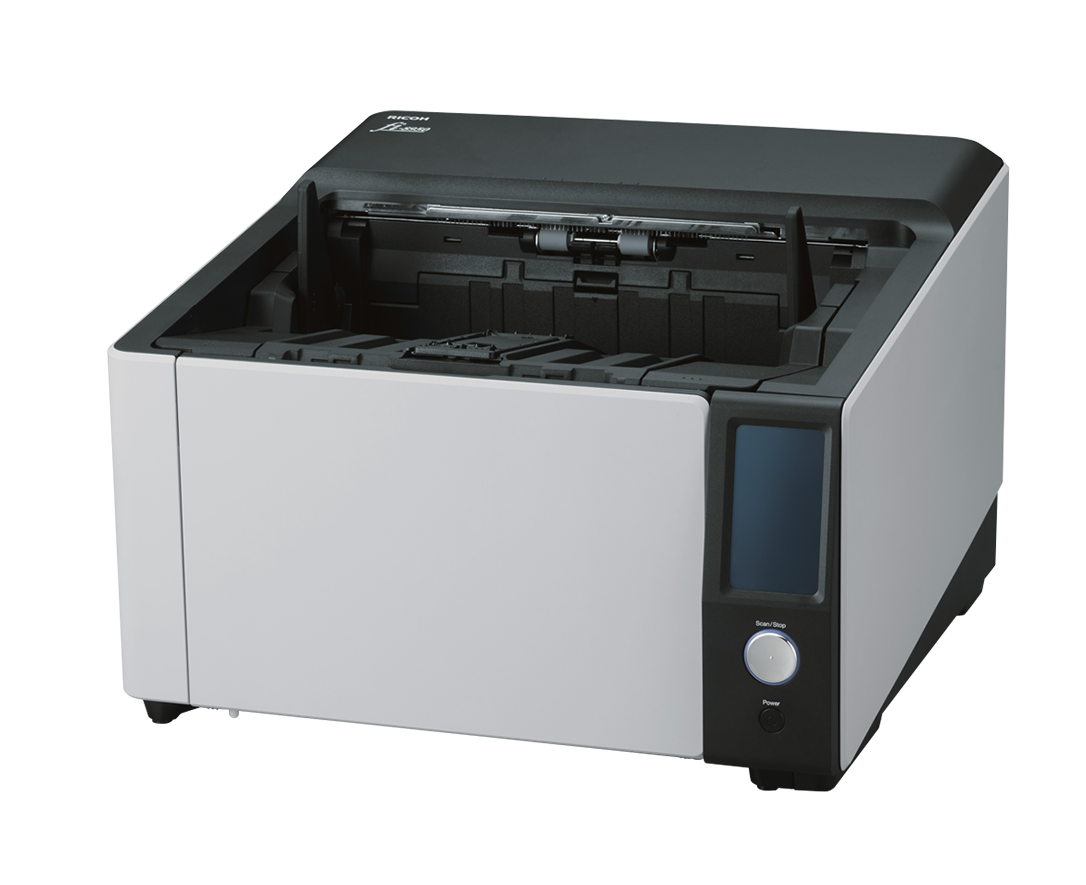
Deploying the RICOH fi-8950 scanner and File Stream software, the company was able to incorporate a solution that addressed their needs efficiently. Leveraging their relationship with File Stream of over 12 years, with a combination of RICOH fi Series scanners, DataScan were able to increase scanning speeds to excellent image quality in an efficient way, thanks to batch scanning features. The RICOH fi-8950 also combated some of the problems that the company had with their varying document types thanks to the scanner’s reliable paper feeding and automatic colour detection functionality, as well as the ability to clear jams easily. End-to-end document management was also enhanced through the RICOH fi-8950 scanner having a large ADF capacity, quiet operation and user-friendly interface.
The Benefit
The success and effectiveness of the solution of File Stream and the RICOH fi-8950 scanner has meant that DataScan are well set up for future projects, including Ireland’s ambitious Digital for Care 2030 plan which means that there is a huge body of work to be done to get every patient record digitised over the next number of years. While a lot of this work will be undertaken on a “this day forward basis”, hospitals will be tackling the digitisation of subsets of records on an as needed basis – chronic disease for example where it is important to track disease progression. DataScan have worked with regional hospitals in Ireland to digitise specific record cohorts, including women’s health and sexual health records and the new HSE requirements will likely create further opportunities for the company.
ConclusionUltimately, DataScan have been able to enhance their document management capabilities through a combination of both File Stream software and RICOH image scanners, seamlessly scanning challenging documentation to high quality in bulk quantities. |
 |
More information
To find out more about our extensive document scanner range, visit: https://www.pfu.ricoh.com/emea/
Case study example to share?
If you have a case study using one of our scanners that you’d like to share with us, please do get in touch – we always like to hear from our partner community. Email the marketing team at marketing@pfu-emea.ricoh.com